
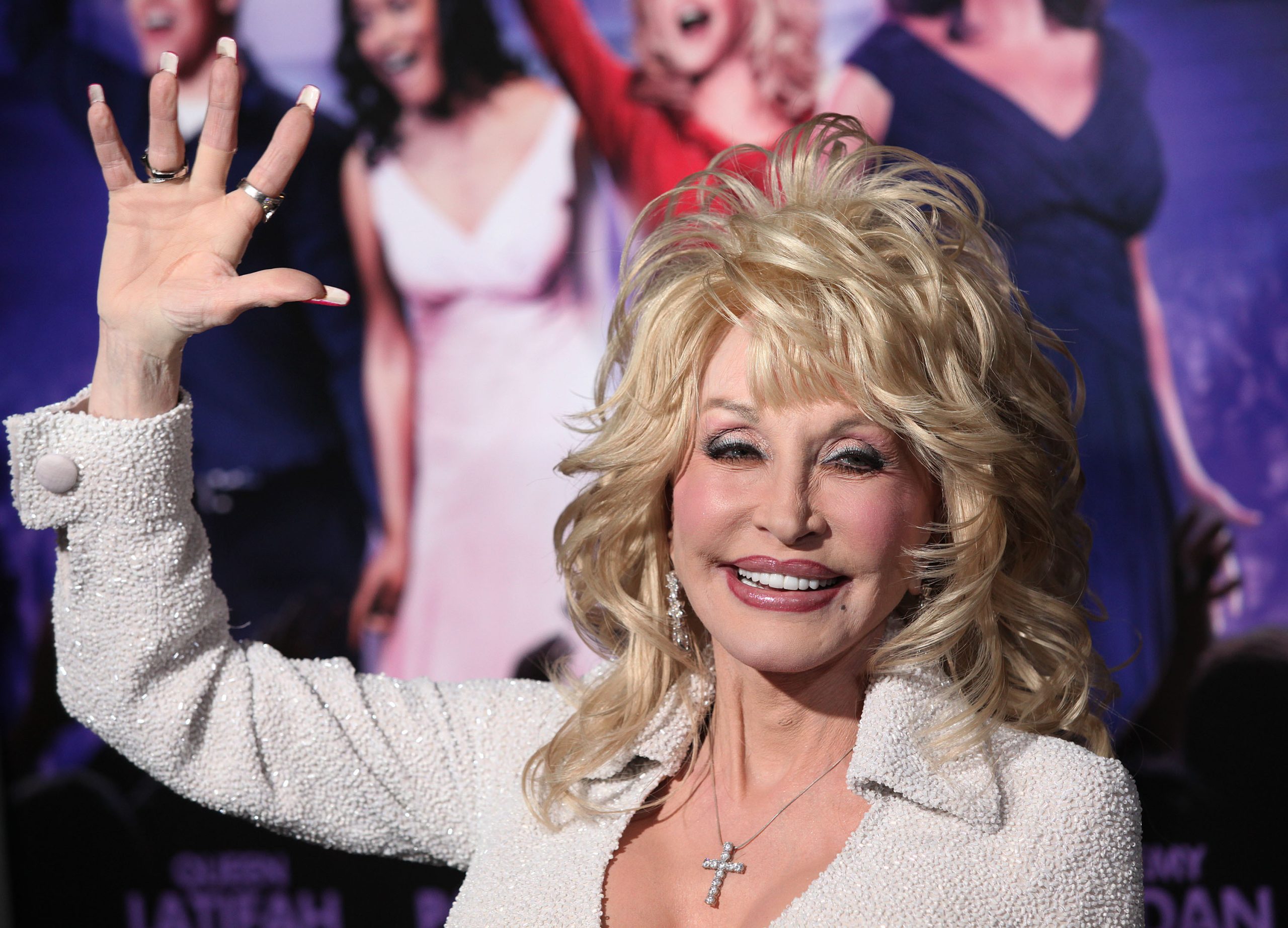
Country music has lost one of its brightest lights.
Dolly Parton, the legendary singer, songwriter, entertainer and philanthropist who rose from the mountains of East Tennessee to become one of the most beloved figures in American culture, has died at the age of 80.
Parton’s family announced her passing this afternoon.
For country music fans, it is difficult to imagine the format without Dolly Parton.
Long before the rhinestones, movies, theme parks and worldwide fame, Dolly was a songwriter with an extraordinary ability to tell a story. She could make you laugh, break your heart and sometimes do both in the same song.
Songs including “Jolene,” “Coat of Many Colors,” “9 to 5” and “I Will Always Love You” became much more than hits. They became part of the American songbook.
Born January 19, 1946, in rural East Tennessee, Dolly Rebecca Parton was the fourth of 12 children. Her family had little money, but their lives were rich in music, faith and family. Those experiences would eventually provide inspiration for some of Dolly’s most personal songs, especially “Coat of Many Colors.”
After graduating from high school, Dolly headed for Nashville and began building a career as a songwriter and performer. Her partnership with Porter Wagoner introduced her to a national country audience, but it soon became clear that Dolly Parton was destined to create a career all her own.
And what a career it became.
She recorded hundreds of songs, earned 25 No. 1 country singles, won 10 Grammy Awards and became one of the rare country performers who could move effortlessly between Nashville and mainstream American entertainment. Her acting career included memorable roles in “9 to 5,” “The Best Little Whorehouse in Texas” and “Steel Magnolias.”
But Dolly’s legacy reaches far beyond records, awards and movie screens.
Through the Dollywood Foundation and Dolly Parton’s Imagination Library, she helped put books into the hands of millions of children. What began in her home county in Tennessee in 1995 grew into an international literacy program distributing millions of books each year. The cause was deeply personal to Dolly because her father could not read or write.
That generosity became as much a part of Dolly Parton as her music.
Her nephew, Bryan Seaver, announced her passing on behalf of the Parton and Owens families. In his tribute, he remembered the doors Dolly opened not only for her family, but for generations of singers, songwriters, musicians and dreamers.
Perhaps that is the best way to understand Dolly Parton’s legacy.
She opened doors.
She opened them for women in country music.
She opened them for songwriters who wanted ownership of their work and careers.
She opened them for artists who dreamed of crossing boundaries without abandoning where they came from.
And she opened them for countless children who discovered a love of reading because a book with Dolly Parton’s name attached to it arrived at their home.
Through it all, she remained unmistakably Dolly: funny, glamorous, self-deprecating, deeply rooted in her East Tennessee upbringing and seemingly incapable of forgetting where she came from.
Her husband of nearly 60 years, Carl Dean, died in March 2025. In the months that followed, Dolly spoke publicly about grieving his loss while also dealing with health challenges of her own. No official cause of Dolly Parton’s death has been announced.
For generations of country fans, Dolly Parton wasn’t simply someone whose songs came through the radio.
She felt like family.
Her voice has been coming from radios, record players, cassette decks, CD players and playlists for more than six decades. Parents introduced her music to their children, who eventually introduced it to theirs.
Very few artists ever become legends.
Even fewer become universally loved.
Dolly Parton somehow became both.
The little girl from the mountains of Tennessee dreamed of becoming a star. She became something considerably bigger: a songwriter, an entertainer, a trailblazer, a philanthropist and one of country music’s greatest ambassadors.
The rhinestones may have stopped sparkling, but the songs won’t.
Neither will the legacy.
Rest in peace, Dolly. And thank you for the music.